
The Ultimate Guide on How to Source Material for a Clothing Line
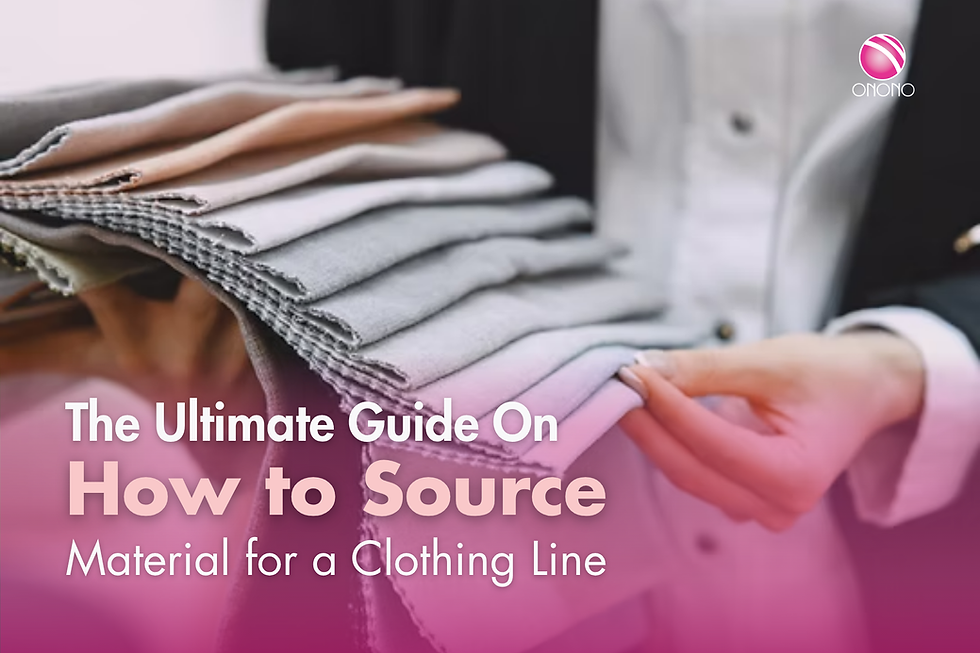
Launching a fashion brand is an incredible journey, but it can quickly feel overwhelming when you dive into the textile world. One of the most critical steps in building a successful brand is understanding how to source material for a clothing line. The fabrics you choose don't just dictate how your garments look; they drive your profit margins, production timelines, and overall customer satisfaction. In fact, fabric typically accounts for 60% to 70% of the finished garment cost, making your sourcing strategy the most impactful operational decision you will make.
Whether you are looking to launch an eco-conscious activewear brand, a premium line of underwear, or high-performance pieces, this guide will provide you with 7 pro tips to navigate textile suppliers, optimize your budget, and source like an industry expert.
What Are the Basic Fabric Requirements You Need to Define?

Before reaching out to any supplier, you must know exactly what you are looking for. Sending a vague request to a fabric mill will often result in delayed responses or being deprioritized. To be taken seriously, you need to create a clear, structured fabric brief that defines your technical specifications. Here are the core textile fundamentals you must establish before sourcing.
1. Fiber Content and Composition
The fiber content is the foundational makeup of your material, and it directly dictates the drape, comfort, durability, and care requirements of your garment. For instance, if you are designing a high-support sports-bra, your brief might specify a blend of nylon and elastane (spandex) to ensure shape retention and moisture-wicking properties. Clearly outlining whether you require natural fibers like cotton and wool, or synthetics like polyester and nylon, helps suppliers instantly match you with the correct material library.
2. Fabric Construction (Knit vs. Woven)
Fabric construction refers to how the yarns are bound together to create the textile. Knitted fabrics are made from interlocking loops of yarn, offering natural stretch, wrinkle resistance, and flexibility, making them the go-to choice for activewear, t-shirts, and lounge items. Woven fabrics, on the other hand, are constructed by interlacing yarns at right angles, resulting in a structured, crisp, and highly durable material ideal for denim, outerwear, and button-down shirts.
3. Fabric Weight (GSM) and Cuttable Width
Fabric weight is measured globally in Grams per Square Meter (GSM). This metric determines the thickness and density of your garment; for example, lightweight summer tops typically fall under 150 GSM, while structured hoodies require a heavyweight fleece over 300 GSM. Additionally, always ask suppliers for the cuttable width rather than the total width. The cuttable width is the usable space across the fabric roll excluding the edges (selvage) that might get damaged during shipping, allowing your factory to accurately calculate garment yield.
How Should You Determine Your Sourcing Budget and Strategy?

An effective sourcing strategy requires balancing your unit cost targets, order volumes, and production timelines. Because fabric represents the largest line item in garment costing, a small reduction in fabric price yields massive savings on your total cost of goods sold (COGS). When planning your calendar, remember that standard textile production lead times average around 85 days. You will need to weigh the pros and cons of sourcing locally, which offers faster shipping but higher prices, versus sourcing offshore, which provides cost advantages but involves higher MOQs (Minimum Order Quantities) and complex shipping logistics.
Which Type of Fabric Supplier Is Right for Your Brand?
Not all textile suppliers operate the same way. Matching your production volume and budget to the correct tier of supplier is the easiest way to avoid overpaying or facing extreme production delays.
1. Direct Fabric Mills
Direct fabric mills are the primary manufacturing plants that weave or knit raw materials from scratch. Because they operate at the source, they offer the absolute lowest fabric prices per yard, making them ideal for established brands with highly consistent volumes. However, they are generally a poor fit for startups because they demand massive MOQs (often 1,000 to 3,000 yards per color) and require a high level of technical textile knowledge to manage.
2. Converters
Converters act as an excellent secondary source for growing brands. They purchase unfinished, raw fabric (known as greige goods) from direct mills and handle the secondary processing, such as custom dyeing, printing, or specialized washing. Converters offer a much wider variety of on-trend colors and seasonal prints while maintaining lower, more accessible minimum order requirements than raw fabric mills.
3. Fabric Jobbers
Jobbers deal in excess fabric, buying up leftover or discontinued textile lots from mills and large converters to sell them at steeply discounted rates. They are highly popular among early-stage brands, capsule drops, or designers creating a unique lounge-sleep collection on a tight budget. The major risk with jobbers is that their stock is non-reorderable—once a specific fabric or color sells out, it is gone forever.
4. Wholesale Distributors
Wholesale distributors maintain large warehouses of in-stock fabrics that are ready to ship immediately, often allowing brands to buy as little as one roll or a few meters at a time. This makes them a perfect fit for low-volume direct-to-consumer (DTC) testing, prototyping, and early sampling. The trade-off is a significantly higher price markup compared to buying directly from a mill, which can eat into your margins as you scale.
5. Sourcing Agents and Managed Partners
Sourcing agents act as a dedicated extension of your company’s production team. They handle vendor vetting, negotiate optimal prices, coordinate lab tests, and oversee origin inspections on your behalf, typically charging a 5% to 10% commission on the purchase order. A major benefit of working with an experienced agent is their ability to pool orders from multiple small fashion brands to hit mill minimums, granting you access to premium materials you couldn't secure alone.
Where Can You Find Reliable Textile Suppliers?
Finding the right partner requires combining traditional industry networking with modern digital tools. Attending major global fabric trade shows, such as Texworld or Sourcing at Magic in the United States, or Première Vision in Europe, allows you to touch fabric hands and build direct relationships with hundreds of international mills. If traveling to an in-person show isn't an option, you can leverage online B2B marketplaces like Alibaba or Faire, or tap into free industry directories provided by reputable organizations like the Council of Fashion Designers of America (CFDA) to discover vetted, high-quality textile suppliers.
How Do You Vet Suppliers and Test Fabric Quality?

A low price quote means nothing if the fabric fails during production or falls apart after a few customer washes. Always protect your brand by requesting official compliance documentation from potential partners, such as ISO 9001 certifications or toxicology safety data if you are developing a kid-accessory line. Before signing a bulk contract, order sample yardage to conduct rigorous physical tests. You should perform comprehensive wear trials and lab tests to verify the fabric's precise shrinkage rate, colorfastness under standard lighting, tensile strength, and anti-pilling performance.
Why Should You Consider Sustainable and Ethical Sourcing?
Eco-conscious production is no longer just a trend—it is a major competitive advantage and an operational necessity as consumer demand and global regulations tighten. When sourcing sustainable materials, look for verified fibers like Global Organic Textile Standard (GOTS) certified cotton, Responsible Wool Standard (RWS) wool, or low-impact closed-loop lyocell. Partnering with mills that employ eco-friendly processing methods, like dope-dyeing or advanced closed-loop wastewater recycling, ensures your brand minimizes its environmental footprint while building transparent supply chains that resonate deeply with modern shoppers.
Partner with Thai Onono for Seamless Apparel Manufacturing
Sourcing the perfect textiles and managing production logistics requires incredible time, energy, and precision. At Thai Onono, we streamline this entire process for you. As an experienced activewear apparel manufacturer, we specialize in producing premium activewear, comfortable underwear, high-support sports-bra designs, cozy lounge-sleep apparel, and safe kid-accessory items.
We take the stress out of production by offering comprehensive material sourcing and full-scale cut-and-sew manufacturing under one roof. Our team works alongside reliable global textile networks to secure the highest quality fabrics at competitive rates, ensuring your apparel lines are crafted beautifully, ethically, and delivered on time. Let Thai Onono bring your creative vision to life, reach out to us today to discuss your next collection!
Tel: (+66) 02-811-6666
Email : sim@thaionono.com
Frequently Asked Questions About Fabric Sourcing
1. How much does fabric typically cost as a percentage of the finished garment?
For most standard cut-and-sew apparel programs, fabric represents 60% to 70% of the total finished garment cost. For highly structured pieces or garments featuring extensive heavy hardware and complex trims, this percentage may drop slightly, whereas basic knit programs see fabric taking up the vast majority of production costs.
2. What is the standard lead time for receiving wholesale fabric?
The standard lead time for receiving wholesale fabric from a direct mill typically ranges between 8 to 16 weeks. This timeline accounts for 3 to 6 weeks of initial sampling and color approval (lab-dips), followed by 30 to 60 days for bulk textile knitting or weaving, and an additional 2 to 4 weeks for final finishing, quality inspection, and freight delivery.
3. When should a small clothing brand hire a sourcing agent instead of buying directly?
A small clothing brand should consider hiring a sourcing agent or managed production partner when their annual revenue is between $1M and $10M and they do not yet have a full-time in-house production team. An agent provides immediate access to restricted offshore mills, enforces strict quality control, and utilizes order-pooling to safely bypass high factory minimums.


Comments